
Pulsar
Construction
Wood vs Composite vs PVC Decking: What's the Difference?
One of the most common questions homeowners in British Columbia ask when planning a new deck is: "What's the difference between wood, composite, and PVC decking?"
Pressure-treated wood, cedar, composite decking, and PVC decking all have different costs, maintenance requirements, appearances, and expected lifespans.
While there is no single "ideal" decking material that fits every homeowner's budget and preferences, understanding the advantages and disadvantages of each option can help you make a more informed decision based on your budget, maintenance expectations, and long-term goals.
What Is Wood Decking?
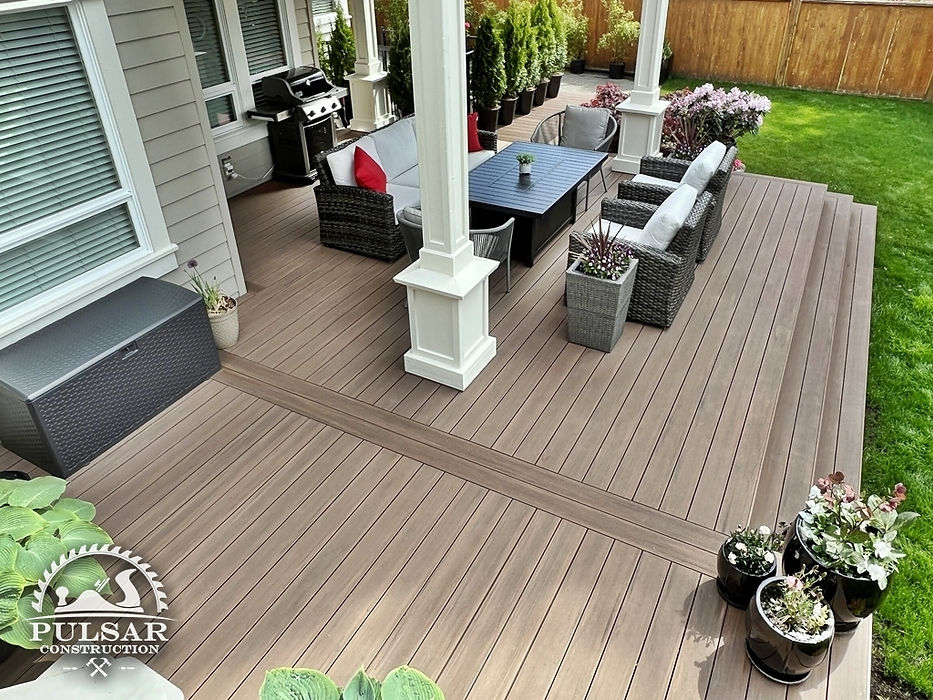
Many Lower Mainland homeowners choose cedar or pressure-treated wood decking due to familiarity, availability, and affordability. It offers a classic look and a natural appearance that's hard to challenge.
Wood decking is the traditional decking material that has been used for generations throughout British Columbia. Today, the two most common types of wood decking are pressure-treated wood and cedar.
Pressure-Treated Wood Decking
Pressure-treated wood is the most affordable decking option available in Western Canada.
In British Columbia, pressure-treated lumber is typically made from softwood species such as Hemlock, Spruce, Pine, or Fir. These woods are placed in specialized pressure chambers where preservatives are forced deep into the wood fibers. This treatment helps protect the decking against fungal decay, moisture damage, and insect attack.
For many years, pressure-treated wood was the standard decking material used throughout the Lower Mainland.
Advantages of Pressure-Treated Decking
• Lowest upfront cost of all decking options.
• Widely available throughout British Columbia.
• Easy to repair or replace individual boards.
Disadvantages of Pressure-Treated Decking
• Requires regular maintenance (cleaning, staining, or sealing).
• Can crack, split, warp, and twist as it ages.
• May develop splinters over time.
Cedar Decking
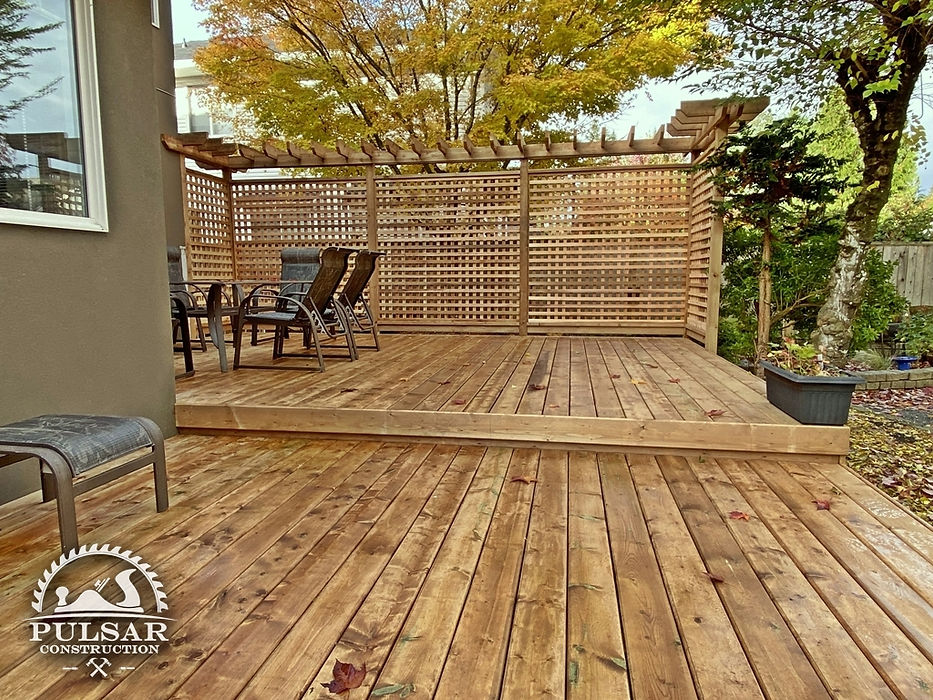
Cedar decking is a classic choice for British Columbia homes. Many homeowners choose cedar decking because of its rich color, attractive grain patterns, and natural appearance.
Cedarwood contains natural oils that help resist moisture, fungal decay, and insects without requiring pressure treatment.
Advantages of Cedar Decking
• Offers a traditional look with attractive natural wood-grain patterns
• Naturally resistant to insects and decay.
• Generally stays cooler than artificial decking in direct sunlight.
• The greener choice for eco-conscious homeowners
Disadvantages of Cedar Decking
• Requires regular maintenance (cleaning, staining, or sealing).
• Higher upfront cost than pressure-treated wood.
• Gradually turns grey if not stained or sealed.
Pressure-Treated Wood vs Cedar Decking: What's the Difference?
Many homeowners struggle to understand the difference between pressure-treated wood and cedar decking.
The simplest way to think about it is this:
• If budget is the main concern, pressure-treated wood decking gives homeowners the most deck for their money.
• Cedar decking is chosen primarily because of its attractive natural wood appearance by homeowners who are willing to maintain it regularly.
With proper maintenance, both pressure-treated and cedar decking can often last 20 to 25 years, and sometimes longer under favourable conditions. However, as with all softwood decking products, neglecting maintenance will significantly reduce their lifespan, especially in the wet climate of the Lower Mainland.
Most deck contractors generally estimate the lifespan of wood decking at 15 to 25 years, depending on maintenance, location, deck height, exposure to moisture, and weather conditions.
What Is Composite Decking?
Composite decking has quickly become one of the most popular choices for BC homeowners when it comes to new deck construction or older deck replacement.
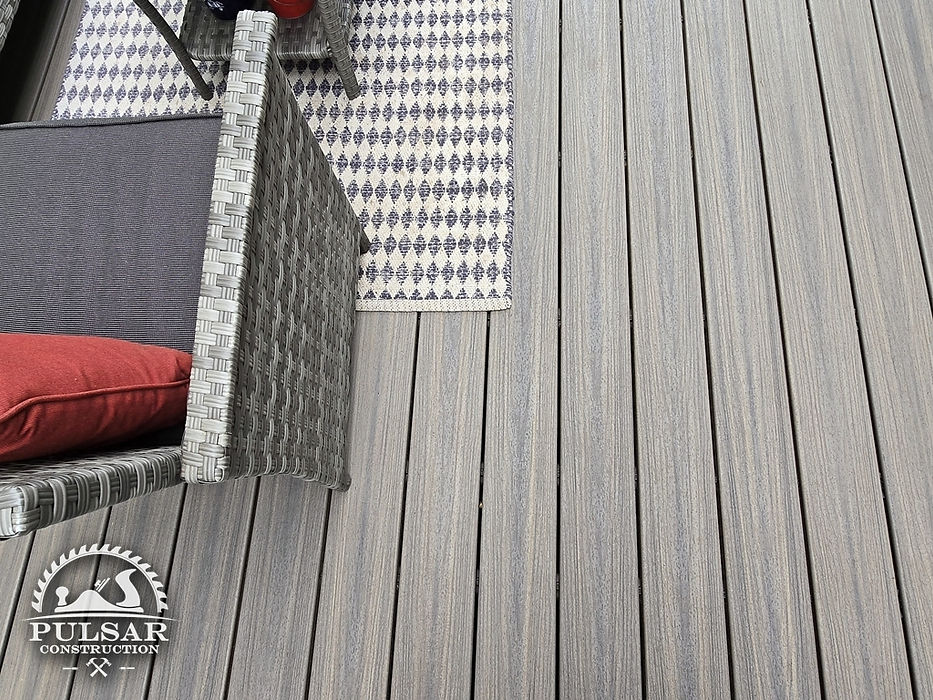
Unlike traditional wood decking, composite decking is designed to provide the appearance of wood while reducing many of the maintenance requirements associated with natural wood products.
Composite decking is a manufactured decking product made from a combination of recycled plastic and wood fibers.
Modern composite decking products feature protective outer caps that help resist moisture, fading, staining, and mold growth.
Advantages of Composite Decking
• Low maintenance.
• No staining or sealing required.
• Resistant to rot and insect damage.
• Available in a wide variety of colors and finishes.
• Long manufacturer warranties, typically 25 to 30 years.
• More durable than traditional wood decking.
Disadvantages of Composite Decking
• Higher upfront cost than wood decking.
• Can become hot during summer months, especially in direct sun.
• Product quality varies significantly between manufacturers and product lines.
• Not completely scratch-resistant.
One reason composite decking can be confusing for homeowners is the wide range of product levels available. Entry-level composite decking may cost only slightly more than cedar, while premium composite decking can approach or even exceed some PVC decking prices.
This is why two composite deck quotes of the same size can differ significantly.
What Is PVC Decking?
PVC decking is a fully synthetic, long-lasting material that requires no sanding or painting. As a wood-free, moisture-resistant product, it's ideal for waterfront and high-humidity areas and for extended wet-weather seasons, such as in the Lower Mainland, BC.
In recent years, PVC decking has become increasingly popular throughout the Lower Mainland among homeowners looking for maximum durability and minimal maintenance.
Advantages of PVC Decking
• Extremely resistant to moisture, will never rot.
• Excellent performance in wet environments.
• Generally stays cooler than composite decking during hot summer afternoons.
• Lightweight, slip-resistant and fire-resistant.
• Very low maintenance.
• Long manufacturer warranties, often 50 years.
• Modern wood-look finishes and textures.
Disadvantages of PVC Decking
• Higher upfront cost.
• Premium product lines may exceed many homeowners' budgets.
• Fewer budget-friendly options compared to composite decking.
PVC decking is often chosen for pool decks, ground-level decks, and backyards that receive long hours of direct summer sun, as well as by homeowners who want the longest-lasting decking product with minimal maintenance.
Wood vs Composite Decking: What's the Difference?
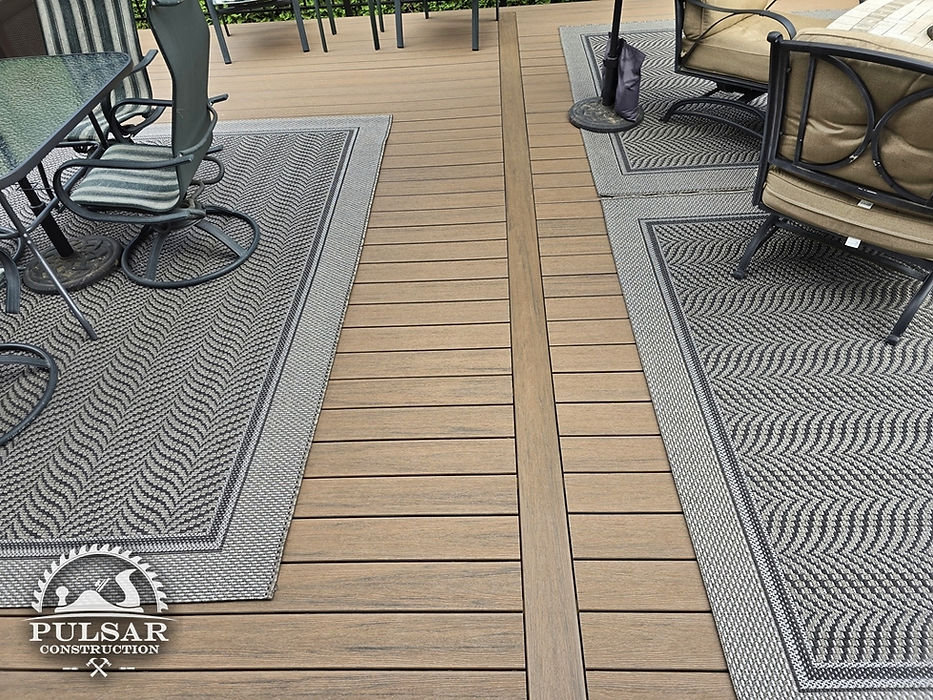
Many homeowners in the Lower Mainland have traditional wooden decks and are used to their decks' look and feel. But the high maintenance requirements of wood decking cause many headaches and budget "leaks" and force homeowners to consider composite decking even if they are skeptical of artificial decking products.
Unlike pressure-treated wood or cedar, composite decking does not require regular staining or sealing to maintain its appearance. For many homeowners in British Columbia, this is one of the main reasons they decide to spend more money upfront.
Composite decking also offers several practical benefits:
• Low- maintenance and longer durability
• No sanding, staining or painting
• Good resistance to rot and insects
• Long manufacturer warranties typically range from 25 to 30 years.
• Wide selection of colours and designs
The only practical advantage of wood decking is that it remains cooler than composite decking when exposed to direct sunlight during summer.
The main drawback is cost. Composite decking is more expensive than wood decking, although many homeowners feel the reduced maintenance makes up for the higher initial investment.
Composite vs PVC Decking: What's the Difference?
Composite decking and PVC decking are often compared because both offer a low-maintenance and long-lasting alternative to traditional wood decking. While they may look similar at first glance, the materials are manufactured differently and perform differently in British Columbia's climate. Homeowners in the Lower Mainland often focus on durability, maintenance requirements, summer heat, and long-term value when comparing these two decking options. Understanding how each product behaves in real-world conditions can help you make a better decision for your deck project.
Why Do Composite and PVC Decking Prices Vary So Much?
There is no fixed price for composite or PVC decking.
Composite decking is available in a very wide range of product quality levels. While basic or entry-level composite decking may cost a bit more than cedar decking, the top-quality composite decking lines can cost the same as, or even more than a premium PVC decking product line. PVC decking has a few product lines and typically falls into the premium category.
Tip. When comparing deck project quotes, look at the indicated decking product line; basic, mid-level, and top-level decking products differ significantly in price. Factors like fasteners, framing details (size & shape), stairs, skirting, and railings can change the total project cost more than people expect.
Which Decking Material Handles Moisture Best?
PVC decking has extremely high moisture resistance because it's a 100% synthetic, wood-free product; it doesn't absorb moisture and cannot be damaged by it. Which makes it ideal for BC's long rainy seasons.
PVC decking is completely immune to moisture, rot, standing water, and even extreme winters. It’s also a great solution for decks near lakes, pool decks, mold-prone backyards, and docks or piers.
But it doesn't make all composites a wrong choice for pool decks or decks near water. High-quality composite decking products can also perform well in wet outdoor areas.
Tips. Important to understand. Your deck's longevity depends not only on the decking product's moisture resistance but also on underdeck drainage, deck framing ventilation, decking spacing, and routine deck surface cleaning.
Which Decking Material Stays Cooler in the Summer?
One of the most common questions BC's homeowners ask: "Will composite decking get too hot in summer?
Composite decking's heat retention has quickly become noticeable for BC homeowners with composite decks on the sunny side of their backyard, since summer heat has become a regular occurrence in the Lower Mainland.
Even very light-coloured composite decking can heat up to 140°F (60°C) when exposed to direct sunlight for more than 2-3 hours, making your deck too hot for bare feet and pet paws.
PVC decking, on hot summer afternoons, can be 30°F cooler than composite decking. PVC material cools much faster as soon as a shadow crosses it, whereas the composite's dense, wood-fiber core retains heat much longer.
The patio awning, umbrella, gazebo, pergola, or tall trees in the backyard can create shade on your deck, making your deck surface significantly cooler.
If you're planning to build a new deck or upgrade an old wooden one with composite decking, it's important to consider the summer heat factor when selecting the decking material — a detail many homeowners often overlook.
No artificial decking material remains cool under direct summer sunlight quite like natural wood decking.
Which Decking Material Is Most Durable?
Both composite and PVC decking are durable products and are highly recommended for homes in British Columbia.
However, PVC decking is often considered the most durable low-maintenance decking option available because it contains no organic materials and is highly resistant to moisture.
For homeowners focused on long-term performance, PVC decking is often viewed as the premium choice.
For homeowners looking for a balance between performance and budget, composite decking is often the better fit.
Which Decking Material Lasts the Longest?
Among the three major decking categories, PVC decking typically offers the longest expected lifespan, as it does not contain organic components and is covered with 50-year manufacturer warranties.
Composite decking is commonly backed by 25-30-year warranties because it contains wood fibres, but it's way more durable than softwood decking.
Wood decking can last for 20-25 years, but it depends heavily on maintenance and exposure conditions.
Regardless of the decking material selected, proper deck construction and quality framing remain critical factors in overall deck longevity.
Which Decking Material Requires the Least Maintenance?
PVC decking generally requires the least maintenance. Composite decking also requires very little maintenance compared to wood. Cleaning the gaps between boards of dust, tree needles and leaves and washing your composite or PVC deck surface one or two times a year is typically the extent of the recommended maintenance.
Wood decking requires the most maintenance because it must be regularly cleaned, stained, and sealed to withstand wet BC's winter season.
How Scratch Resistant Are Composite and PVC Decking?
One of the most common questions BC homeowners ask is: "Is composite or PVC decking scratch-resistant?"
The honest answer is that no composite or PVC decking product is completely scratch-resistant. Scratch resistance varies significantly between manufacturers and product lines, and premium decking products generally provide better scratch resistance than entry-level products.
All composite and PVC decking products have a plastic surface and can be scratched by pet claws, moving furniture, sharp objects, or small stones trapped in shoe soles.
Outdoor temperature also plays an important role because plastic softens as it warms. During the cooler winter season, decking surfaces tend to be harder and more resistant to scratches. But during hot summer afternoons, composite and PVC surfaces become softer and more vulnerable to scratching.
Minor surface scratches are simply part of normal deck use and are almost impossible to avoid completely, especially during hot summer weather when decking surfaces are warmer and softer.
Minor scratches are often difficult to notice in everyday use. However, deep scratches typically remain visible and are generally not covered under manufacturer warranties because they are considered normal wear and tear rather than manufacturing defects.
Which Decking Material Is Right for Your Budget?
There is no single decking product that is perfect for every homeowner's taste and budget.
Pressure-treated wood is usually chosen when minimizing upfront cost is the primary goal.
Cedar decking is often chosen by homeowners who prefer the look and feel of natural wood.
Composite decking is typically selected by homeowners looking for a balance between cost, appearance, durability, and maintenance.
PVC decking is often chosen by homeowners who want the most durable, lowest-maintenance decking option available and are willing to invest more upfront.
The best decking choice ultimately depends on your budget, lifestyle, maintenance expectations, and long-term plans for your home.
If you're considering a new deck in the Lower Mainland, BC, understanding these differences can help you choose a decking product that you'll enjoy for many years to come.